

Building a Wrestling Culture
by Jon Gums – Dakota Grappler
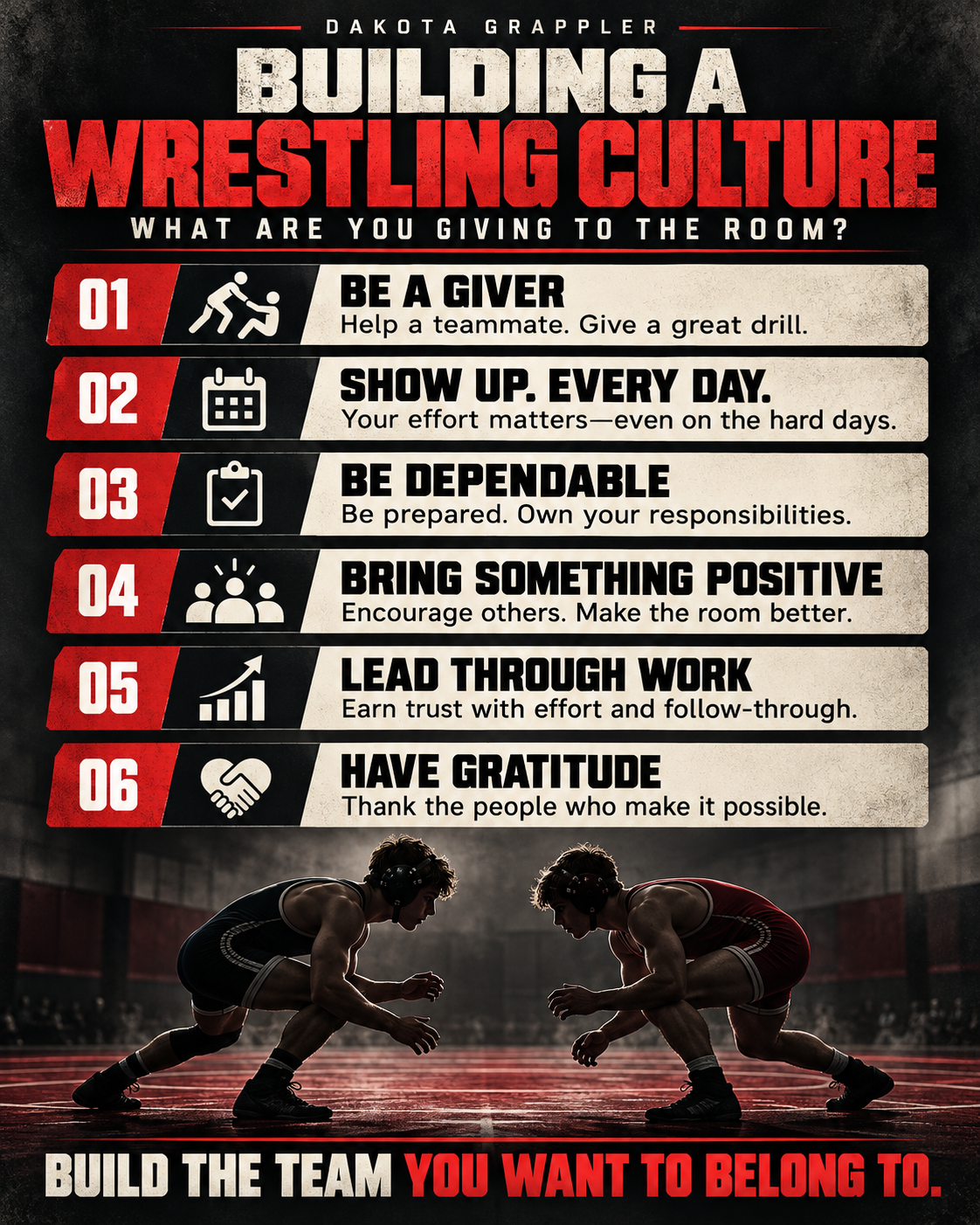
What are you giving to the room?
Every wrestler wants to be part of a good program.
They want good practice partners, coaches who care, teammates who support them, and a crowd that gets loud when a match is on the line. They want to walk into a wrestling room where people expect to win.
That sounds great. But somebody has to build that room.
And that brings us to a question worth asking this Monday:
Am I helping create the kind of program I want to belong to?
It’s easy to measure what we’re getting out of wrestling. We know our record. We know where we stand in the lineup. We notice how much attention we get from the coaching staff.
It takes a little more honesty to look at what we’re giving back.
Be a giver
A giver makes the room better for somebody else.
Sometimes that means staying a few minutes after practice to help a younger wrestler understand a position. Sometimes it means giving your partner a hard, honest drill instead of going through the motions. It might mean picking up the tape and empty bottles without waiting for a coach to point at them.
None of those things will get your name in the rankings. Your teammates will notice, though. Especially the younger ones who are trying to figure out how things work.
There’s nothing wrong with wanting to win, earn a spot, or get recognition. Those goals belong in wrestling. The trouble comes when everything becomes a transaction: I’ll help if it helps me. I’ll support the team if I’m happy with my role.
A strong program needs people who can see beyond their own bracket.
Show up when it matters
When does it matter?
Pretty much all the time.
The big dual matters. So does a Tuesday practice in December when you’re tired, school has been a grind, and nobody feels especially excited to work.
Showing up means being present enough to give a good effort. It means listening during instruction, being ready when drilling starts, and sticking with your partner when practice gets hard.
It also means staying involved when your own day goes badly.
After a tough loss, can you still get to the edge of the mat for a teammate? If you’re out of the lineup, can you still help the person who’s in it prepare?
Those moments can be difficult. That’s why they tell us so much.
Be someone people can count on
Being low maintenance doesn’t mean staying quiet when you’re hurt, confused, or struggling. A healthy team needs honest conversations, and asking for help is part of that.
It means taking responsibility for the things you can handle.
Have your gear. Be on time. Follow through. Take a correction without turning it into an argument. If you make a mistake, own it and get back to work.
Coaches have a whole room to teach. Teammates have their own challenges. Handling your responsibilities gives everyone a little more room to do their job.
Over a long season, that dependability matters.
Contribute something positive
A wrestling room doesn’t need everyone to be loud. It needs people who contribute.
For one wrestler, that might be bringing energy to warmups. For another, it might be quietly working hard enough that the partner across from them has to raise their effort.
Being positive doesn’t mean pretending a bad practice was good. You can be frustrated. You can be disappointed. The question is what you do next—and how you treat the people around you while you work through it.
Constant complaining wears on a room. So does blaming everyone else.
Encouragement helps. So does an honest, “We need to do that better,” followed by the effort to back it up.
Let your work give your words weight
Leadership isn’t reserved for seniors, captains, or state qualifiers.
A young wrestler can lead by being prepared. A backup can lead through the way they compete in practice. An injured wrestler can lead by staying connected and helping where they can.
But if you want to ask more of your teammates, they need to see you asking more of yourself.
They know who finishes the workout. They know who gives a good partner a real challenge. They also know who talks about commitment and then finds a reason to skip the inconvenient parts.
You don’t have to be the best wrestler in the room to earn their respect. You do have to be willing to do the work.
Remember to be grateful
It’s easy, somewhere in the middle of a season, to start treating every opportunity like an obligation.
Another practice. Another bus ride. Another long Saturday in a gym.
Take a moment to notice what makes those days possible: the coach preparing practice, the family member rearranging a work schedule, the volunteer working a table, the teammate who keeps pushing you.
Thank them. Be specific. Then show your appreciation in how you use the opportunity.
Gratitude and ambition can live in the same wrestler. You can want more while appreciating what you already have.
This Monday, take a look at your place in the program.
Who can you help? What responsibility can you handle better? Who deserves a thank-you you haven’t given yet?
Then follow through.
A wrestling culture takes shape in those everyday choices. Every person in the room gets a hand in building it.


